Can a Business Stay Open During Commercial Painting?
Often, a business can remain open during commercial painting. Indiana Painting may work quietly in the background or during off-hours, depending on access, safety, ventilation, occupant needs and the specified coating system. A site review determines how the work can be phased and whether particular areas require temporary restrictions.
What Determines Whether a Business Can Remain Open?
The answer depends on the building and how it operates. Before an occupied-space commercial painting project begins, factors such as operating hours, customer and employee traffic, entrances and exits, ventilation, secure areas and coating requirements need to be considered.
An office may have different scheduling needs than a school, restaurant, retail store, church or auto dealership. That is why the operating plan should be developed around the actual property, rather than assuming the entire building can or cannot remain open.
| Planning factor | Why it matters | Possible approach |
|---|---|---|
| Operating hours | Determines when spaces are busiest | Schedule work around peak periods when practical |
| Traffic | Wet coatings and work areas may affect circulation | Establish temporary work zones |
| Ventilation | Odor and airflow vary by space and coating | Evaluate ventilation and product options |
| Coating cure time | Areas may require restricted access | Reopen areas according to project and product requirements |
| Security | Crews may need access to controlled areas | Coordinate access before work begins |
| Phased access | Some areas may need to remain operational | Complete the project section by section |
How Does Phased Commercial Painting Work?
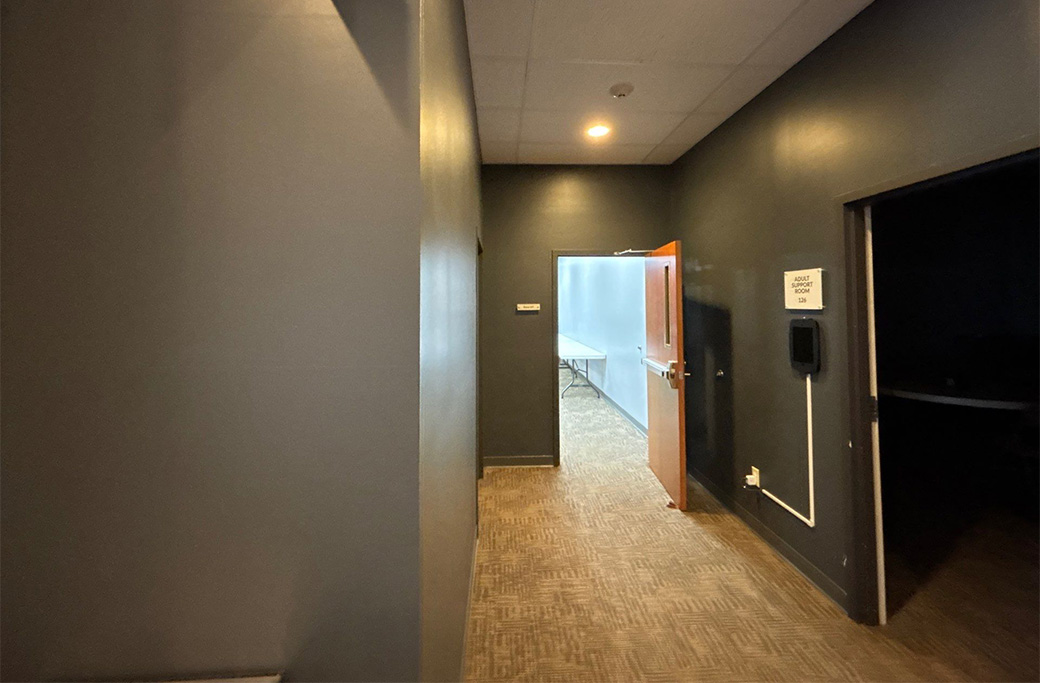
Larger commercial projects may be planned by rooms, corridors or other work zones depending on the facility and project requirements.
Phased commercial painting divides a project into manageable areas, instead of treating the entire property as one work zone.
For example, one section may be prepared and painted, while another remains available for normal operations. Once the first area is ready for use, work can move to another section.
The exact sequence depends on entrances, exits, corridors, equipment, furnishings and areas that cannot be taken out of service. Facility managers and other stakeholders should identify these constraints during planning.
Can Commercial Painters Work After Hours?
Off-hours painting may help when daytime work would interfere with employees, customers, tenants or students. Indiana Painting’s commercial service information indicates that work can sometimes take place quietly in the background or during off-hours.
The appropriate schedule should still be confirmed for the individual project rather than assuming evening, overnight or weekend work will always be available.
For facilities that need ongoing touch-ups rather than a large repaint at once, Indiana Painting also offers planned quarterly painting maintenance.
What About Paint Odor, Ventilation, and Cure Time?
Product selection matters in occupied commercial spaces, but a low-odor or low-VOC coating does not automatically eliminate ventilation or access considerations.
The coating should be selected according to the surface, traffic, environment and project requirements. Drying and curing requirements also vary, so there is no universal amount of time that every painted area must remain restricted.
Ventilation limitations and occupant sensitivities should be discussed before the project begins.
How Are Customers, Employees and Other Occupants Protected?
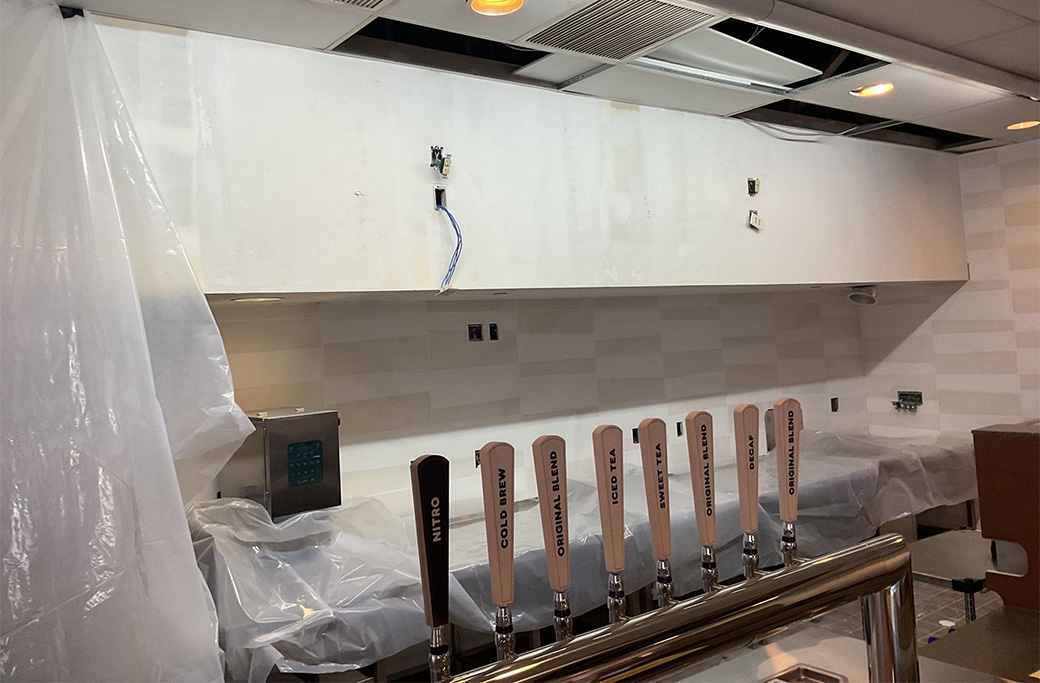
Protecting equipment and surrounding surfaces is an important part of planning commercial painting in spaces that need to return to use.
Planning should prevent occupants from coming into contact with wet coatings or active work areas, while also protecting furniture, equipment and surrounding surfaces.
The needs can differ considerably by property. Offices may need access to workstations and meeting rooms. Retail stores and auto dealerships may need to preserve customer routes. Schools must account for students and staff. Restaurants have operational areas that require special consideration, while churches may need work coordinated around services and events.
These conditions should be reviewed before the schedule is finalized.
When Might an Area Need to Close Temporarily?
Temporary restrictions may be necessary when painting affects a critical entrance or corridor, ventilation is limited, a coating requires additional drying or curing time, or occupants cannot reasonably be separated from the active work area.
A restriction does not necessarily mean closing the entire business. The site review helps determine whether individual rooms, corridors or sections can be taken out of service while other areas remain operational.
What to Discuss During the Commercial Painting Site Visit
Before Indiana Painting evaluates the property, be prepared to discuss:
-
- Operating hours
- Restricted or secure areas
- Peak customer or employee traffic
- Required completion date
- Occupant sensitivities
- Ventilation limitations
- Access and parking requirements
- Areas that cannot be taken out of service
Providing these details early helps the project team evaluate an occupied-space painting plan based on how your facility actually operates.
Plan Commercial Painting Around Your Operations
If your Central Indiana facility needs painting, the first question does not have to be, “How long do we need to close?”
Planning to paint without unnecessarily interrupting your operations? Request a commercial painting site review with Indiana Painting Company. We’ll discuss your business hours, access requirements, occupants, ventilation concerns and project needs so the appropriate painting plan can be evaluated for your Central Indiana facility.